
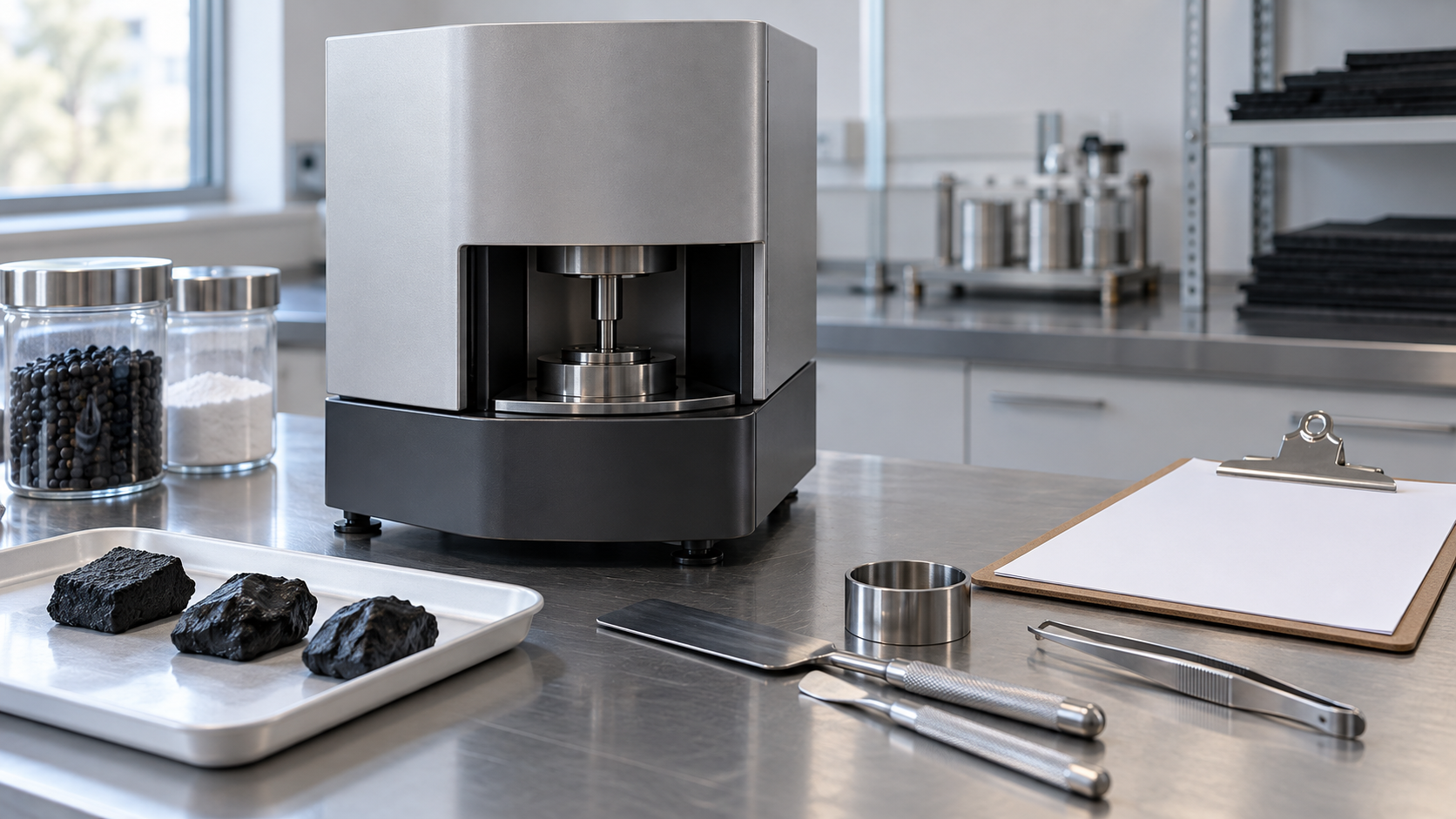


Review a rubber cure rheometer report by matching the compound identity, instrument, test temperature and result definitions before comparing cure times or torque values. Use the report to support a controlled processing decision. A laboratory cure curve alone does not establish the correct production moulding cycle.
For buyers sourcing SBR, NBR or prepared compounds, cure information can clarify a supplier discussion. It can also create confusion when the report omits its testing basis. This guide provides a purchasing checklist for identifying what was tested, which conclusions the evidence supports and what still needs a production trial.
1. Start with the Purchasing Decision
Decide whether you are qualifying a new material, comparing batches or investigating a processing change. Those questions need different evidence. A development curve may help compare candidate compounds, while a routine lot check needs a defined specification and sampling plan.
Write the decision beside the report request. This prevents a general technical discussion from becoming an unintended supply guarantee. If the application team has not yet agreed an acceptable processing window, request comparative evidence and a trial proposal rather than inventing limits from a single curve.
Keep the commercial deadline separate from the technical approval. A report that arrives quickly still needs an identifiable sample and an agreed interpretation.
2. Identify the Tested Compound
Record the complete material code, formulation revision, batch reference and sample source. Establish whether the laboratory tested a supplier reference formulation, your intended production compound or material taken from an actual delivery.
A raw polymer grade name does not identify the entire cure system. For an SBR or NBR sourcing comparison, ask how the reported formulation relates to your own mixing and production process. Do not present a result from a reference compound as guaranteed behaviour for every recipe using that polymer.
Where formulation details are confidential, agree the information needed to maintain traceability. Confidentiality does not remove the need to identify the sample, revision and scope of approval.
3. Record the Instrument and Method
Request the test method, edition and instrument type. ISO 6502-3:2023 addresses selected vulcanization characteristics measured with a rotorless curemeter. Its public scope is a useful reference for identifying the report basis, not a replacement for the laboratory procedure.
Do not treat every document labelled “rheometer test” as directly comparable. Ask the laboratory which measurement configuration and settings were used. Preserve the stated conditions instead of silently replacing missing information with customary settings.
If two suppliers use different methods, flag the comparison for technical review. Similar-looking curves or matching result names do not by themselves establish equivalent measurements. A common evaluation program may be more useful than an unsupported numerical ranking.
4. Keep Temperature and Time Basis Together
| Report field | Question for the supplier |
|---|---|
| Compound and revision | Which offered material does this curve represent? |
| Method and instrument | Is the test basis the same as the agreed requirement? |
| Temperature and test duration | Are the complete conditions clearly stated? |
| Result definitions and units | How were each reported time and torque value determined? |
| Sample history | What preparation, storage and conditioning information is relevant? |
| Acceptance rule | Which limits were agreed before testing? |
Retain the temperature beside every reported time in a comparison sheet. Do not detach a favourable number from the conditions that produced it. If the report duration differs between candidates, ask whether the selected results remain suitable for comparison.
No universal test temperature, duration or tolerance is proposed here. Use the agreed method and application requirement to define the program.
5. Ask for Definitions, Not Abbreviations Alone
A report may contain several abbreviated time and torque fields. Ask for their definitions, units and calculation basis rather than assuming that a familiar abbreviation has exactly the same meaning on every supplier sheet.
Keep the complete curve with the results table where available. A summary can be useful, but it should remain connected to the original report and sample identity. If the laboratory reports an exception or a deviation, retain it in the purchasing record.
Separate an observed characteristic from the acceptance decision. The laboratory may supply a measured result while the purchasing specification defines whether it is acceptable. A pass label without its decision rule leaves an important gap.
6. Do Not Copy Laboratory Times into Production
A laboratory test and a production moulding operation are different systems. Do not copy a reported cure time directly into the production instruction without a justified process review and the required validation.
Ask engineering which evidence is needed to establish a practical cycle for the actual component, equipment and process. Keep the trial record connected to the tested compound revision. A change in material or process may require renewed review.
The procurement objective is to provide clear material evidence, not to prescribe an unverified manufacturing setting. Record the remaining trial questions and the person responsible for resolving them before routine supply approval.
7. Compare Batches on an Agreed Basis
For routine quality review, use the limits and methods agreed for the material. Do not retroactively reject a batch because its result differs from a typical data-sheet value or a previous delivery when no acceptance limit was established.
Where results appear inconsistent, first check identity, methods, units and sample history. Preserve the original reports and ask for clarification. If retesting is needed, agree the sample, laboratory and decision rule before interpreting the new result.
Review the cure information alongside the other required properties. Our Mooney viscosity and hardness guide explains why different property measurements should not be used as substitutes for one another.
8. Put Document Requirements in the RFQ
State whether the request concerns raw polymer, an agreed reference compound or a supplied production compound. Include the application, reference material, required report basis and intended qualification stage.
A useful request is: “Please identify the tested formulation and batch, provide the complete cure report with method, instrument and temperature, define the reported results and units, and confirm whether this evidence represents the offered production material.”
Agree document revision control and change notification before repeat orders. Link the report to the approved material record. Our COA, TDS and SDS checklist helps separate lot evidence, grade information and handling documentation.
9. Frequently Asked Questions
Does a cure curve approve the finished part?
No. Complete the application and production checks required by the approved qualification plan.
Can raw polymer grade names identify a cure system?
Not completely. Ask which compound and formulation revision produced the report.
Should every supplier use the same cure limits?
Use the requirements agreed for the specific material and test basis. No universal purchasing limits are proposed here.
Can I compare abbreviated results without the curve?
Request the definitions and complete available report before deciding whether the comparison is meaningful.
10. Conclusion and Source
A useful rubber cure rheometer report connects an identifiable compound to a defined test program and an agreed decision. Preserve that chain, resolve missing information and validate production settings before approving a change.
Reviewed October 30, 2026. This is an original procurement checklist, not a laboratory procedure or production-cycle instruction. Google Trends was inaccessible; no measured trend claim is made.
Send the reference grade or compound, application, document requirements, trial quantity and destination. Ask which grade-specific information is available for your review.
Request a Quote
Leave a Reply