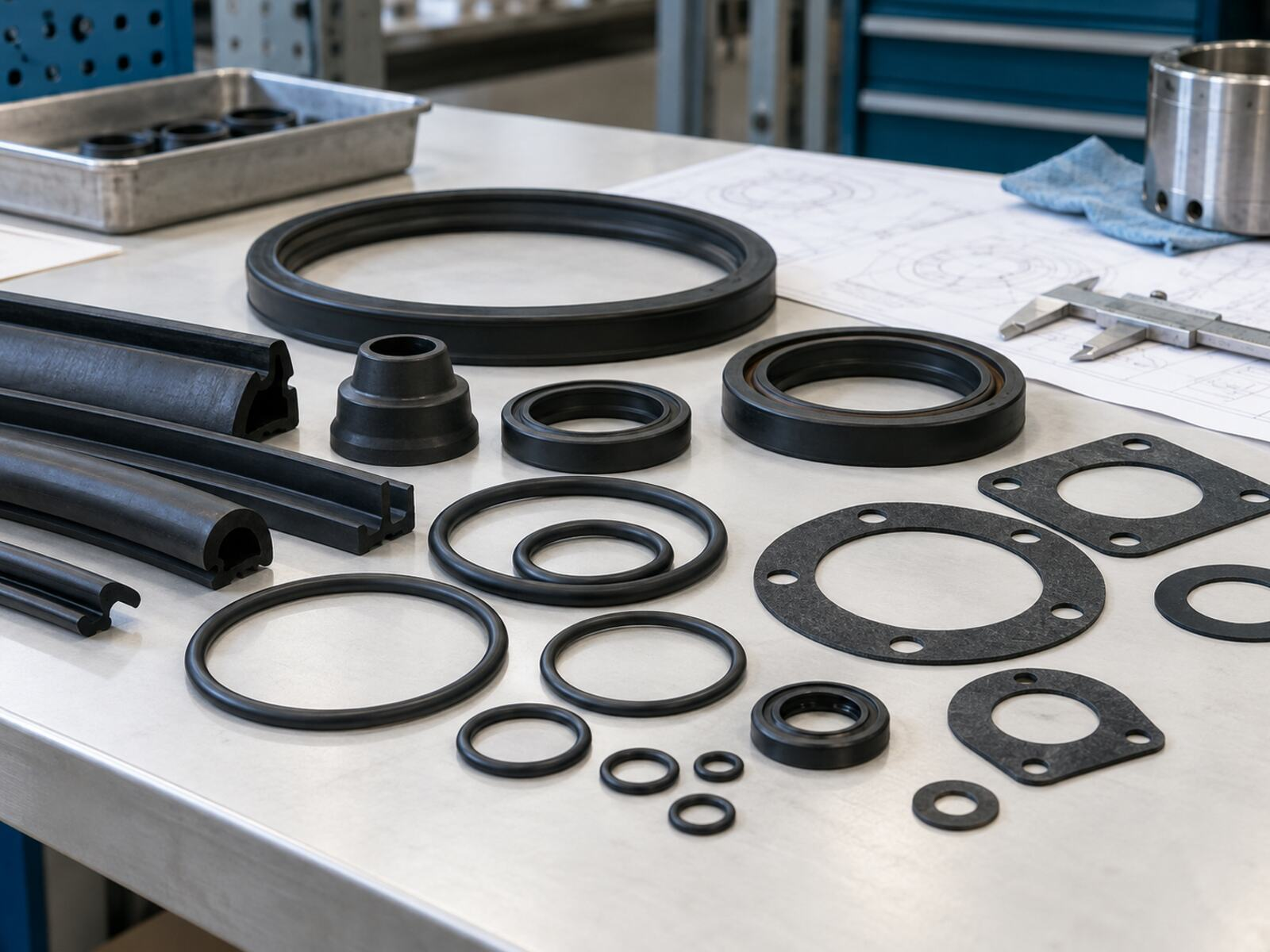


SBR is commonly evaluated for tires, wear surfaces and general technical rubber goods; NBR is commonly evaluated for oil-contact seals, hose components and other fluid-related applications. The application name alone cannot select a grade. Identify the function, exposure and failure mode, then validate the actual compound and finished component.
1Key Takeaways
- A product can contain several rubber layers with different functions and material requirements.
- Fluid identity, abrasion, flexing and environment matter more than a broad industry label.
- Raw polymer data do not establish the performance of a cured component.
- Use a documented trial and application-specific tests before approving a grade.
- Special end-use approvals require separate evidence for the actual formulation or product.
2Choose by Component Function
“Automotive rubber” or “industrial hose” is too broad for a reliable recommendation. A hose lining contacts the conveyed fluid; its cover faces the surrounding environment; reinforcement interfaces create additional requirements. The parts may need different compounds even within a single product.
Break the application into functions. Ask what the rubber must resist, how it moves, what it contacts and which failure would be unacceptable. Then translate the answers into measurable criteria. This gives a formulator a useful brief and prevents procurement from requesting a generic material with no approval basis.
For polymer definitions and the distinction between raw rubber and compounds, see SBR and NBR fundamentals. This article focuses on how to build the application brief and select the tests.
3SBR in Tires and Technical Rubber Goods
Producer application guides list SBR in tires, retreads, conveyor belts, molded products and shoe soles. These are starting points for evaluation, not proof that every SBR grade suits every version of those products. The compound design and processing route remain decisive.
Tire and retread compounds
Tread selection involves interacting objectives such as wear, traction and dynamic behavior. Do not carry a polymer recommendation from one tire design into another without considering the formulation. Emulsion and solution SBR are distinct families with different grade options.
Footwear and wear surfaces
A sole or wear pad needs a defined balance of abrasion response, flexing, dimensions and surface performance. Color, staining and bonding requirements may also matter. Test the actual component or representative compound rather than approving solely from a polymer family description.
General molded goods
For indoor mechanical components, define load, movement, contact surfaces and dimensional requirements. A broadly suitable material can still fail if the cure, geometry or bonding system is unsuitable. Material screening and component design should therefore progress together.
4NBR in Fluid-Contact Components
NBR is a common candidate when oils and fuels are part of the application. ZEON also identifies specialized NBR products for adhesives, modification and other technical uses. These examples illustrate the breadth of the family; they do not make conventional baled NBR suitable for every listed process.
Seals and gaskets
A seal must combine fluid compatibility with mechanical behavior and geometry. Record whether it is static or dynamic, the pressure conditions, contact surfaces, assembly method and operating temperatures. A polymer family cannot compensate for an unsuitable seal design.
Hose and lining duties
Identify the conveyed fluid, cleaning agents and possible changes in composition. Distinguish continuous immersion from intermittent contact. Include the operating cycle and any cold-start condition in the test plan.
Oil-contact footwear or technical parts
Define which oil or chemical is involved and what “resistant” means for the finished product. Swelling, loss of properties and surface changes can matter differently in different components. Use measurable acceptance criteria instead of an unqualified oil-resistant label.
5Application Screening Matrix
| Application function | Possible starting family | What must be verified |
|---|---|---|
| Dry wear surface | SBR candidate | Abrasion, flexing, dimensions and recipe |
| Oil-contact seal | NBR candidate | Actual fluid, compression behavior and geometry |
| Hose lining | NBR or another family after fluid review | Immersion, pressure duty and cleaning exposure |
| Hose or belt cover | Family selected for the environment | Weathering, abrasion, bonding and fatigue |
| Footwear sole | SBR or selected nitrile compound | Wear, flexing, slip and actual exposure |
| Special adhesive or modifier | Dedicated polymer grade | Form, compatibility and process suitability |
The matrix is deliberately conditional. Where the exposure falls outside the candidate family’s suitability, expand the material search. A label such as “NBR hose” cannot establish approval for an unspecified solvent mixture.
6Turn the Application into a Test Plan
Build the plan around failure modes. If leakage is the concern, a tensile result alone will not answer it. If a belt cover wears prematurely, fluid testing alone will not explain the duty. Identify what each test contributes and how the result connects to the component requirement.
Liquid exposure
ISO 1817 addresses determination of liquid effects on vulcanized or thermoplastic rubber. Use the agreed fluid, duration and temperature and record the relevant changes. The method supports measurement; the buyer must still define acceptable results for the component.
Process and assembly behavior
Check mixing, molding or extrusion under the intended conditions. For bonded components, include the actual substrate preparation and bonding route. Record assembly observations where installation affects the product.
Representative service duty
Use a test that represents the important movement, loading or exposure pattern. A laboratory test can narrow the options, while a controlled component trial can reveal geometry and interface problems. Define the limits of each result instead of claiming universal service life.
7A Qualification Checklist for Manufacturers
- Identify the component and each rubber layer’s function.
- Record fluids, normal and peak temperatures, environment and mechanical duty.
- Define critical failure modes and acceptance criteria.
- Shortlist the polymer family and exact grade with producer documents.
- Prepare a controlled compound and preserve the recipe and cure record.
- Run relevant laboratory tests and investigate inconsistent results.
- Produce representative parts on the intended equipment.
- Review dimensions, assembly and application performance.
- Approve with a written scope and rules for later changes.
For a practical example, a conveyor cover handling dry abrasive material and a cover exposed to oil have different screening needs. The fact that both belong to the conveyor industry does not justify one universal compound. Describe the conveyed material and exposure before requesting a recommendation.
Keep retained samples where the quality plan requires them and identify the lot used for the trial. This allows a later problem to be compared with the approved material rather than an unrelated sample.
8What to Include in an Application RFQ
Give the supplier enough information to avoid a misleading recommendation. Share the current material when known, the reason for changing it, the process and the critical properties. If a drawing is confidential, provide the non-sensitive functional requirements needed for initial screening.
- Component type, rubber function and production method.
- Exact fluids, contact pattern and operating environment.
- Temperature range and relevant load or movement.
- Current grade or compound and observed problems.
- Required tests, approvals, document language and trial schedule.
- Quantity, packaging, destination and commercial basis.
Use the grade selection guide to narrow the candidate and the document checklist to assemble the evidence.
9FAQ
Can SBR be used for all industrial gaskets?
No. The fluid, temperature, load and sealing requirements determine suitability. The product name alone is insufficient.
Does NBR resist every fuel or solvent?
No. Specify the actual medium and verify the compound under relevant conditions. A general oil-resistance description is not universal compatibility evidence.
Can one polymer grade cover a hose lining and cover?
Possibly, but only if both functions satisfy their separate requirements. Assess each layer before combining approvals.
Does a producer application list prove end-use compliance?
No. Food-contact, medical or other specific requirements need evidence appropriate to the actual product and jurisdiction.
Is laboratory approval sufficient for production?
Laboratory data support screening. Confirm the intended manufacturing route, representative parts and any necessary application trial before final release.
10Conclusion
SBR and NBR offer useful starting options across industrial rubber applications. A reliable decision starts with function and exposure, then moves through grade review, controlled compounding and component validation. This sequence makes the enquiry technically meaningful and the approval traceable.
11Sources and Technical References
- ARLANXEO: E-SBR applications
- ARLANXEO: S-SBR application families
- ZEON: NBR applications and specialty forms
- ISO 1817:2024: liquid effects on rubber
Reviewed October 13, 2026. The matrix is a screening aid, not a performance guarantee or certification. Confirm grade-specific information and application criteria before ordering.
Send the component drawing or application description, exposure conditions, processing method and required property tests. Ask Linwell to discuss candidate rubber grades and the documents needed for your evaluation; confirm all supply terms separately.
Request a Quote