
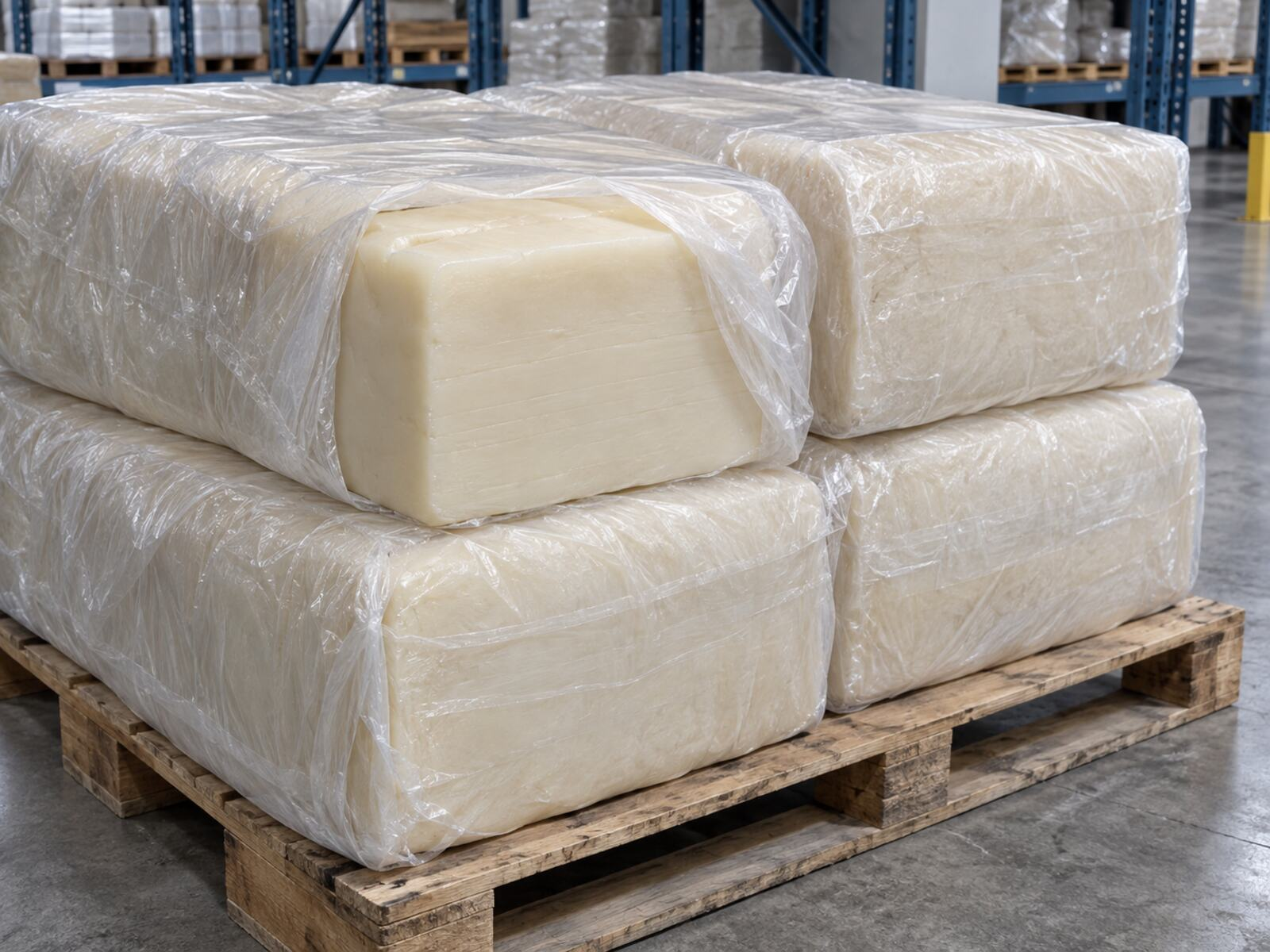


Choose a rubber grade by defining service conditions and your processing window, then comparing exact producer specifications and validating a trial compound. A familiar grade number or an attractive quotation is not sufficient evidence of suitability. Approve the material against written requirements that purchasing and engineering share.
1Key Takeaways
- Separate polymer-family selection from exact grade approval.
- Define mandatory requirements before comparing supplier offers.
- Use compatible test conditions; typical data are not automatically purchase limits.
- Qualify the compound and production route, not only the raw polymer.
- Approve substitutions and changes through a documented review.
2Define the Service Conditions First
Write a short application brief before requesting a grade recommendation. Identify the finished component, its function and the failure you need to prevent. A hose lining, belt cover and molded gasket can require different properties even if all are described as industrial rubber products.
Exposure and operating duty
Record fluids by actual identity, normal and peak temperatures, outdoor exposure, contact duration, static or dynamic duty and mechanical load. Distinguish continuous exposure from occasional splash. If fluid composition changes during operation, include that variation in the brief.
Mandatory versus preferred requirements
Classify each requirement as mandatory, desirable or informational. A customer drawing, approved material list or product-specific test requirement may constrain selection. A preferred color or easier mixing cycle should not override a mandatory performance limit.
A useful requirement has a test, conditions, acceptance criterion and owner. “Good oil resistance” lacks all four. “Volume change under the agreed fluid exposure method within the approved limit” becomes an assessable engineering requirement once the details are supplied.
3Select the Polymer Family before the Grade
For SBR and NBR, the starting question is often whether general mechanical duty or oil-contact behavior dominates. That screening choice does not close the material decision. Refer to SBR and NBR fundamentals for the family distinction.
Consider other elastomer families when the application requires properties outside the candidate range. Do not force SBR or NBR into a requirement simply because a supplier offers them. Keep the rejected alternatives and the reasons in your technical file so the selection can be reviewed later.
Specialty variants also need explicit identity. Conventional NBR, carboxylated NBR and blends do not represent the same material. Likewise, emulsion and solution SBR may perform different roles in a formulation. Specify the family and exact grade together.
4Identify the Grade Variables That Matter
A producer portfolio can contain several grades within the same polymer family. ZEON identifies acrylonitrile content, viscosity, chemistry and form as NBR selection variables; ARLANXEO distinguishes multiple SBR architectures. Translate those variables into questions about your recipe and process rather than choosing the largest or smallest datasheet number.
| Variable | Question to resolve | Approval evidence |
|---|---|---|
| Polymer identity | Is it the intended family and variant? | Producer name and full designation |
| Mooney viscosity | Does the method match the reference? | TDS, COA and controlled comparison |
| Composition or oil extension | Does the recipe balance change? | Grade-specific technical review |
| Supply form | Can the equipment handle this form? | Feeding and processing trial |
| Stabilization and appearance | Are color and storage expectations met? | Supplier information and part trial |
| Batch variability | Are limits appropriate for the process? | Agreed limits and lot records |
A product code can contain producer-specific information. Ask what the designation means rather than assuming a universal decoding rule. Record suffixes exactly; a short name can hide a meaningful difference.
5Read Datasheets without Creating False Guarantees
Separate typical values, specification limits and application suggestions. A typical value indicates a reference result; it does not automatically become a promise for every batch. Ask which values the supplier will accept as contractual requirements and which require your own verification.
Check units, method, test temperature and specimen preparation. ISO 289-1 covers Mooney viscosity measurement, but a method reference alone is not a substitute for matching the reporting conditions. A buyer cannot safely compare numbers taken under different conditions as if they describe the same test.
Do not compare a raw polymer value with a cured compound result. If tensile strength or hardness is reported using a reference formulation, request the recipe and cure basis needed to interpret it. Your own compound may produce different results.
When information is missing, identify it as an open question. A blank field should not become an invented estimate just to complete a comparison table.
6Match the Candidate to the Production Window
Describe the actual process: internal mixing, milling, extrusion, calendering or molding. Record the baseline cycle, discharge conditions, feeding arrangement, cure process and known defect modes. A candidate must satisfy both part performance and practical manufacturability.
Establish a fair baseline
Use an approved reference lot and keep the recipe and trial procedure stable. Document equipment, operator observations and test conditions. If a candidate needs a recipe adjustment, treat the adjusted compound as a separate evaluation rather than blending the results into the original trial.
Measure the process consequences
Record handling, dispersion observations, extrusion appearance, dimensional control and cure behavior as relevant. Avoid reducing approval to a single laboratory value when the line depends on several interacting properties. Assign responsibility for accepting any trade-off.
7Run a Trial with Clear Release Gates
- Verify producer, grade and sample batch identity against the documents.
- Compare raw material indicators using agreed methods.
- Mix a controlled reference compound and retain the recipe record.
- Measure cured properties against the application specification.
- Add exposure or aging tests appropriate to the service conditions.
- Produce a limited line trial and review defects, dimensions and processing observations.
- Confirm repeatability with an additional lot when the risk justifies it.
- Issue a written approval identifying the material, formulation and conditions covered.
For liquid exposure, ISO 1817 provides a recognized test framework. It does not decide the acceptable change for your component. Engineering must set the acceptance limits and ensure that the chosen conditions represent the intended application.
Do not release a candidate because the production deadline is approaching while critical tests remain open. Record a hold, investigation or approved conditional disposition through the buyer’s quality process.
8Build the Procurement Specification
Convert the approval into a specification that can be used for routine orders. Include exact identity, critical limits, test basis, batch documents, packaging, storage instructions and change notification expectations. Preserve the document revision so suppliers and receiving staff use the same requirements.
A practical comparison separates qualified-material cost from other consequences: recipe changes, line productivity, scrap, inspection work and logistics. Request dated quotations on the same quantity and delivery basis. Do not invent savings or assume the cheapest bale produces the cheapest approved component.
See the technical document guide for evidence control and the supply-chain guide for shipment planning.
9Manage Substitutions and Changes
An approved trade name is not a blanket approval for another producer, site or variant. Ask whether a proposed change affects identity, formulation, test method, packaging or supply form. Engineering should decide which parts of the qualification need repeating.
Keep an approved alternative list only when the materials have completed the relevant evaluation. Informal statements such as “same specification” should trigger a document comparison, not automatic substitution. Track material revisions and retain evidence that links the received lot to the approved version.
10FAQ
Can I select a grade using Mooney viscosity alone?
No. Viscosity helps describe uncured processing behavior, while composition, formulation and application performance remain separate questions.
Is a matching grade number enough for replacement?
No. Compare producer-specific specifications and qualify the candidate under the actual recipe and process.
Should all datasheet values become purchase limits?
No. Identify the properties critical to your process and agree measurable limits. Typical data should not be converted into guarantees without agreement.
How much material is needed for a trial?
Calculate the quantity for laboratory mixes, production trials, repeat tests and retained samples. Confirm the resulting requirement with the supplier.
Who should approve the final grade?
Engineering and quality should approve technical suitability; procurement should ensure routine orders match that approval and its commercial conditions.
11Conclusion
Reliable grade selection starts with a defined requirement and ends with a documented approval. Between those steps, compare exact identities, align test conditions and validate the compound on the production route. A clear specification reduces avoidable disputes and makes later sourcing decisions easier.
12Sources and Technical References
- ZEON: NBR grade selection variables
- ARLANXEO: S-SBR architecture and grade families
- ISO 289-1: Mooney viscosity measurement
- ISO 1817:2024: liquid exposure testing
Reviewed October 13, 2026. The workflow is practical purchasing guidance. It supplies no universal material limits, certifications, inventory statements or performance guarantees.
Send the application, current grade, processing route, critical property limits, required documents and destination. Ask Linwell to discuss candidate materials and documentation for evaluation. Availability and commercial terms require written confirmation.
Request a Quote