
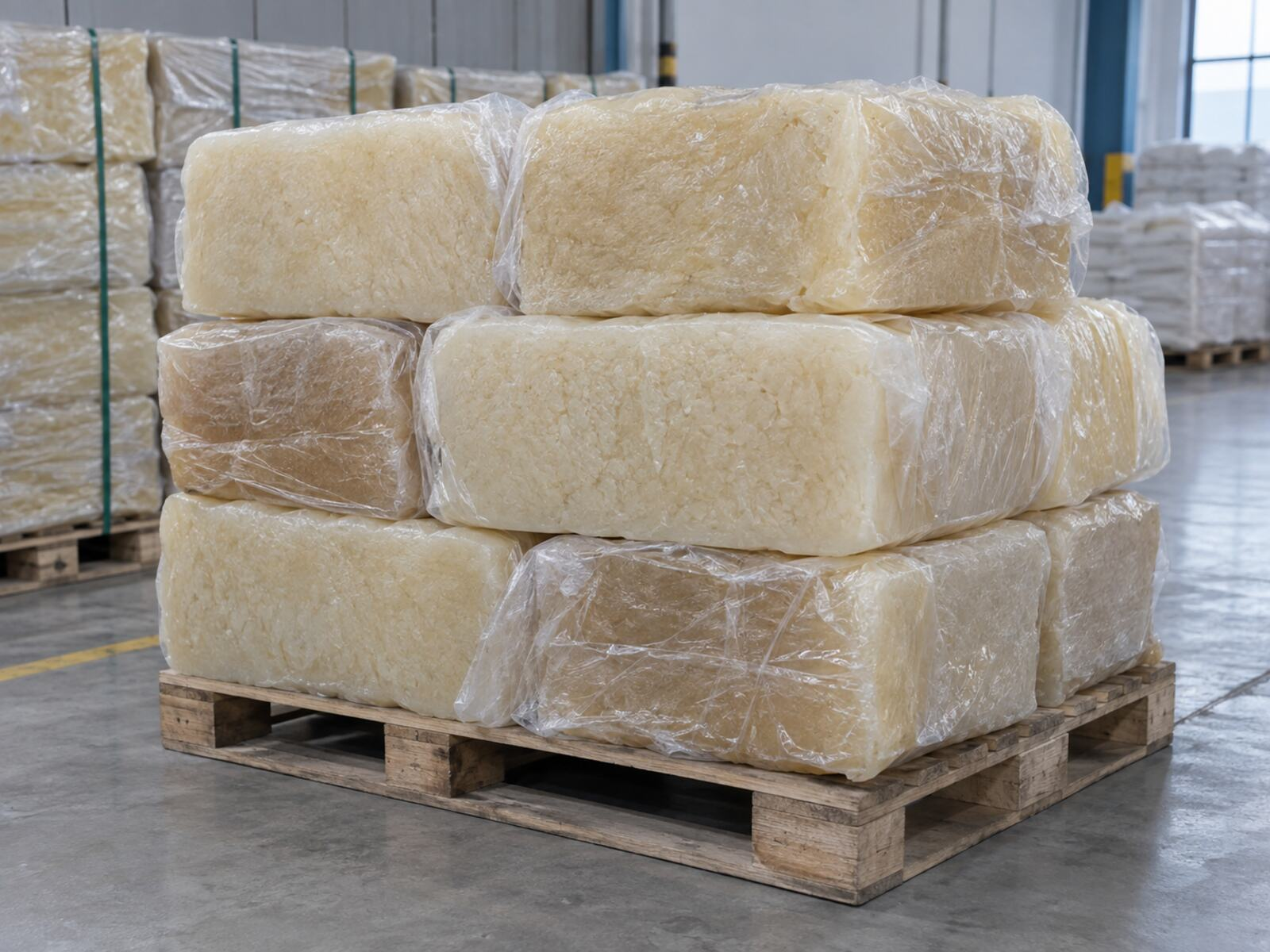


SBR is usually a starting point for general mechanical and abrasion-related rubber products; NBR is usually a starting point when oils or fuels drive material selection. Neither family name guarantees finished-component performance. Choose the polymer family first, then verify the exact grade, compound and operating conditions before buying.
1Key Takeaways
- SBR means styrene-butadiene rubber; NBR means acrylonitrile-butadiene rubber, also called nitrile rubber.
- Oil exposure is a selection boundary, but the exact fluid, temperature and compound still require evaluation.
- Raw polymer viscosity is a processing indicator, not a finished-part hardness or service-life rating.
- An equivalent-looking grade number is a qualification candidate, not automatic approval.
2What SBR and NBR Actually Describe
Both materials are synthetic elastomers supplied for further processing. A rubber compound combines a polymer with fillers, curing agents and other ingredients. Vulcanization turns that compound into a crosslinked material. A manufacturer buying bales therefore purchases a formulation input, not a finished seal or belt with predetermined properties.
SBR combines styrene and butadiene; NBR combines acrylonitrile and butadiene. The chemical distinction explains their different application priorities. Put the common abbreviation, producer and exact grade together in your specification so a generic description cannot replace an approved material.
This distinction matters when procurement compares a polymer datasheet with a component drawing. The first describes the raw material or reference-compound results. The second defines what the actual product must achieve. Connect them through a documented recipe and trial rather than assuming the documents describe identical products.
3SBR: Emulsion and Solution Grades
Emulsion SBR, or E-SBR, and solution SBR, or S-SBR, are different production families. ARLANXEO lists oil-free and oil-extended E-SBR grades for tires, retreads and technical rubber goods. Its S-SBR portfolio varies in microstructure and functionalization for different formulation objectives. These distinctions make “SBR” an insufficient buying description.
Record whether the reference material is oil extended, its viscosity method and its processing route. A replacement containing extension oil may change the recipe balance. Do not compare bale prices or substitute weights before confirming the polymer and oil basis.
A designation such as SBR 1502 can narrow an enquiry, but the producer datasheet remains necessary. Do not assume every suffix, antioxidant system or specification window means the same thing across suppliers.
4NBR: Fluid Resistance and Grade Differences
NBR is commonly evaluated for oil-contact applications. ZEON organizes its NBR range by acrylonitrile content, processability, chemistry and supply form. Higher acrylonitrile content generally favors oil and fuel resistance while low-temperature flexibility moves in the opposite direction. This trade-off requires investigation; the highest content is not always the best choice.
Separate conventional NBR from carboxylated NBR, NBR/PVC blends and hydrogenated nitrile rubber. Related names describe different products. A requirement for ordinary baled NBR should not silently become a powder, blend or specialty polymer during quotation.
Identify the exact fluid behind a resistance claim. Lubricating oil, a solvent mixture and fuel containing additional components represent different exposures. Use compatibility information to shortlist, then verify the selected compound under relevant conditions.
5SBR and NBR Comparison for Buyers
| Decision | SBR starting point | NBR starting point |
|---|---|---|
| Polymer identity | Styrene and butadiene | Acrylonitrile and butadiene |
| Screening priority | Mechanical duty and compound design | Fluid exposure and cold flexibility |
| Oil-contact components | Do not assume suitability | Evaluate exact fluid and compound |
| Grade variables | Viscosity, styrene, oil extension and architecture | Acrylonitrile, viscosity, chemistry and form |
| Approval evidence | Recipe and production trial | Recipe, exposure and production trial |
This comparison avoids universal temperature limits, hardness values and price rankings. Those depend on the grade, formulation and application. Obtain the relevant specification instead of turning a family-level tendency into a purchase guarantee.
6Processing Properties versus Finished-Part Properties
Mooney viscosity is measured on uncured rubber under defined conditions. ISO 289-1 describes a shearing-disc method for uncompounded or compounded rubber. Compare results only when preparation, timing and temperature align. A number without its method and notation is incomplete.
Finished-part hardness, tensile behavior, compression set and abrasion response arise from the complete formulation and cure. A harder part is not necessarily a better seal; an easier-flowing polymer is not necessarily the most durable product. Identify which result belongs to the raw rubber and which belongs to a specific test compound.
Keep mixing sequence, filler system and cure conditions stable during initial comparisons. Otherwise a formulation change can mask a polymer difference and prevent the team from identifying the cause of a result.
7A Practical Qualification Sequence
- Define component duty: fluid, temperature, mechanical load, environment and processing route.
- Select a polymer family and obtain the exact grade TDS and applicable safety information.
- Ask which datasheet values are typical and which are agreed acceptance limits.
- Match a batch-specific COA to the sample or trial shipment.
- Run a reference mix; record processing observations and cured-property results.
- Add application-specific exposure testing. ISO 1817 provides a framework for evaluating liquid effects on vulcanized or thermoplastic rubber.
- Conduct a production trial and approve with written criteria and change-control rules.
For example, a dry indoor wear pad and an oil-contact seal may both look like simple black rubber parts. Their exposure requirements lead to different screening decisions. Appearance is not enough to choose between the polymer families.
Record deviations during the trial rather than immediately changing the recipe to make the alternative pass. An adjustment may be reasonable, but engineering must evaluate the adjusted compound as a new approval basis. Keep the baseline data so later purchasing decisions remain traceable.
8Documents and RFQ Information
The TDS helps identify a candidate grade; a COA reports results for a particular batch; the SDS addresses safe handling. None alone proves that your component meets its drawing. Keep the technical approval report with the material documents.
- Producer, full grade designation, suffixes and supply form.
- Reference material and reason for evaluating an alternative.
- Critical processing and finished-part acceptance criteria.
- Required document language, batch identity and test methods.
- Trial quantity, destination, packaging and evaluation date.
Use the rubber grade selection guide for the next decision and the technical document checklist for qualification evidence.
9FAQ
Can NBR replace SBR in an existing recipe?
Only after formulation and process review. Different chemistry can affect mixing, cure and final properties; a shared bale format does not make the polymers interchangeable.
Does SBR always cost less than NBR?
No universal price relationship should guide an order. Compare dated quotations for qualified grades on the same quantity, packaging and delivery basis.
Does raw NBR guarantee an oil-resistant part?
No. Fluid compatibility, formulation, cure and service conditions determine the outcome. Verify the actual compound with relevant tests.
Are E-SBR and S-SBR interchangeable?
Not automatically. Their architecture and formulation roles may differ. Identify the reference material and qualify the replacement under controlled conditions.
What should a first-time importer request?
Request producer identity, exact grade, current TDS, applicable safety information, proposed batch COA, packaging details and written commercial terms.
10Conclusion
Start with exposure and processing requirements, choose a polymer family, compare exact grades, and verify the compound on the real production route. This turns a broad SBR/NBR comparison into a material decision that procurement and engineering can both defend.
11Sources and Technical References
- ZEON: Nipol NBR product families and selection variables
- ARLANXEO: E-SBR portfolio and applications
- ARLANXEO: S-SBR families
- ISO 289-1: Mooney viscosity method
- ISO 1817:2024: effect of liquids
Reviewed October 13, 2026. Manufacturer examples describe their own portfolios, not Linwell inventory or guaranteed performance. Checklists are practical recommendations; confirm current grade specifications before ordering.
Send your application, fluid exposure, temperature conditions, processing method and required documents. Ask for the exact grade identity and available technical information before arranging a trial. Confirm quantity, availability, packaging and delivery terms in writing.
Request a Quote