


1Key Takeaways
- A synthetic rubber price is only comparable when the polymer grade, specification, packaging, quantity, delivery basis and document package are the same.
- Feedstock conditions matter, but application fit, lot consistency and processing risk often have a larger total cost impact than a small unit-price difference.
- Ask suppliers to separate material price, packaging, freight, duties and optional certification so the commercial comparison is transparent.
For buyers, the useful question is not simply “What is today’s synthetic rubber price?” It is “What exactly does this quotation include, and will the material remain inside our technical and supply window?”
2What search interest signals
Google Trends data for the worldwide web-search category over the past 12 months shows an average index of 46 for “synthetic rubber,” compared with 23 for “nitrile rubber,” 7 for “SBR rubber” and 2 for “rubber sourcing.” The related query “synthetic rubber price” was shown as rising by approximately 50%.
Google Trends is a normalized interest indicator, not a quotation database or a forecast. The data does not prove that market prices will rise. It does show that broad synthetic-rubber pricing questions are receiving more search attention than narrower sourcing terms. This article therefore answers the buyer’s underlying need: how to understand quote differences without treating an unverified market number as a purchasing decision.
Recent industry reporting supports the broader context. OPIS described 2026 rubber markets as being affected by automotive demand, inflation, trade conditions and feedstock-chain developments. At the same time, ISCC and tire-industry participants have highlighted increased interest in traceable circular and bio-attributed materials. These are market signals, not guarantees for any one grade or shipment.
3Why synthetic rubber quotes move
Synthetic rubbers such as SBR and NBR are produced from petrochemical intermediates. The U.S. Energy Information Administration notes that butane can be cracked to produce butadiene, a precursor to synthetic rubber, and that petrochemical feedstocks can come from natural-gas processing and petroleum refining. Changes in feedstock availability, energy, plant operating rates and regional logistics can therefore affect the producer’s cost base.
However, a buyer does not purchase an abstract commodity. The order is a defined polymer grade produced at a specific site, packed in a specific format, accompanied by agreed documents and delivered under agreed terms. A quote can change even when a headline market indicator is stable because the commercial package changed.
4Seven price drivers buyers should separate
1. Polymer family and grade design
Standard emulsion SBR, solution SBR, NBR and specialty grades are not interchangeable price categories. Bound monomer content, Mooney viscosity, stabilizer system, oil extension and producer specification all affect both manufacturing cost and application fit.
2. Feedstocks and producer operating conditions
Butadiene, styrene and acrylonitrile are connected to regional petrochemical chains. Availability can be influenced by cracker economics, maintenance, energy and downstream demand. Buyers should use feedstock information as context, not as a formula that predicts a supplier’s exact offer.
3. Quantity and shipment cadence
A trial pallet, a mixed container and a regular full-container program have different handling and planning costs. State the quantity per order, annual estimate and expected call-off schedule so the supplier can quote the correct basis.
4. Packaging and warehouse requirements
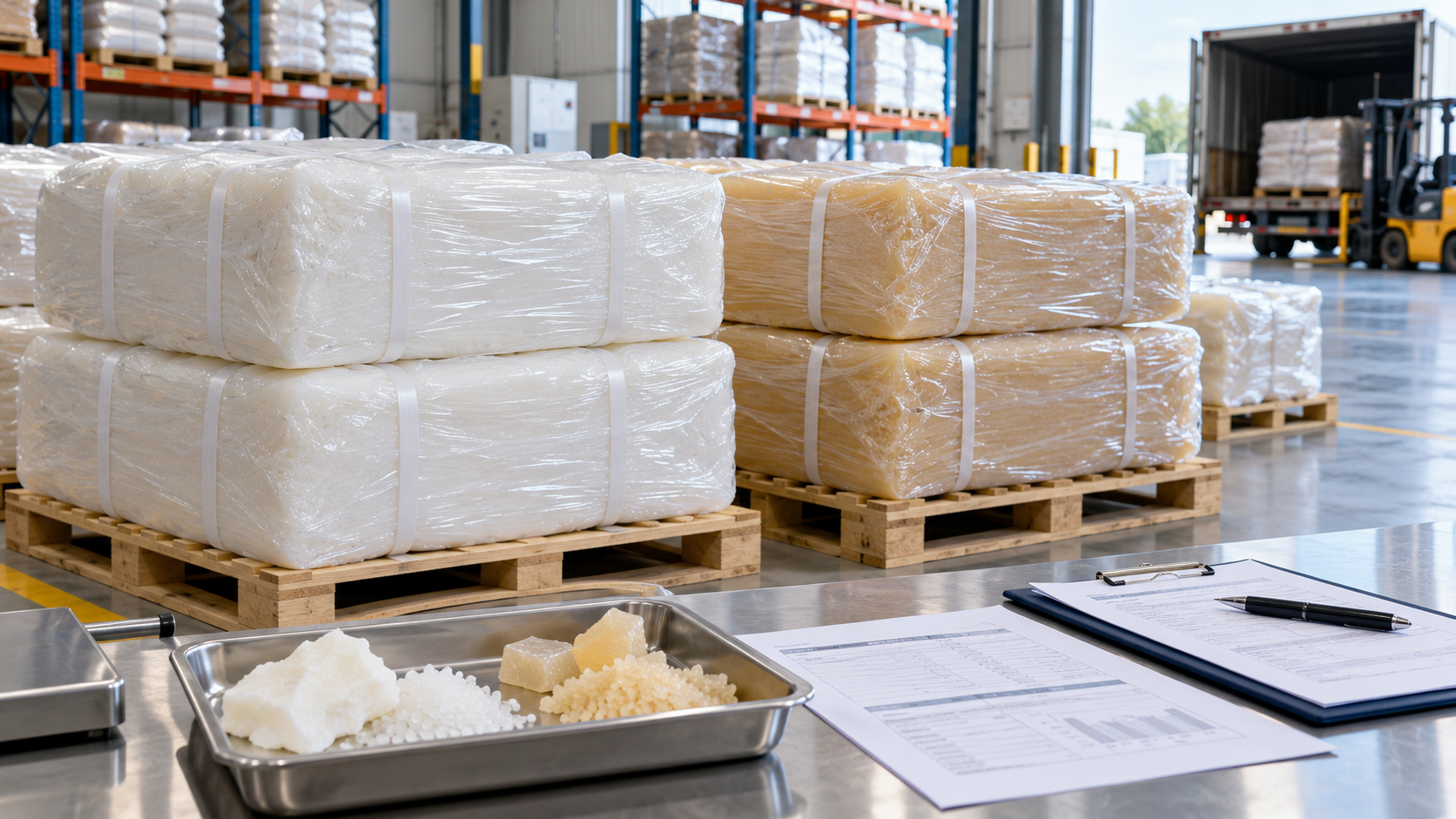
Bale weight, film type, pallet material, labeling, moisture protection and container loading affect cost and operational risk. If your plant requires a particular pallet footprint or barcode format, include it in the RFQ.
5. Freight, Incoterms and destination charges
An EXW, FOB, CFR or DDP quotation allocates transport cost and risk differently. Port, container, insurance, inland delivery, duty and tax should be separated before comparing landed cost.
6. Documentation, testing and traceability
A lot-specific COA, test-method alignment, origin statement, SDS, labeling and change-control commitment require supplier systems. These controls add value because they reduce ambiguity during incoming inspection and customer audits.
7. Certified circular or bio-attributed options
ISCC PLUS and producer programs increasingly cover circular or bio-attributed synthetic rubber. Certification, chain-of-custody records and product carbon-footprint data may create a different commercial basis from conventional material. Specify whether these features are mandatory, optional or outside the current RFQ.
5How to normalize synthetic rubber RFQs
| RFQ field | What to specify | How to compare |
|---|---|---|
| Material identity | Producer, grade, production site and approved equivalent policy | Reject ambiguous “same as” descriptions |
| Technical limits | Mooney viscosity, monomer content, volatile matter, ash and agreed methods | Compare specification limits, not only typical values |
| Quantity basis | Trial, order quantity, annual estimate and shipment cadence | Use the same volume tier for every supplier |
| Packaging | Bale weight, film, pallet, label and loading pattern | Include repacking and warehouse costs |
| Delivery term | Named Incoterm, port or address, currency and validity | Convert to one landed-cost basis |
| Documents | TDS, SDS, lot COA, origin, traceability and change control | Record missing or conditional documents |
| Quality claims | Certification scope and evidence, if required | Verify certificate holder, site and product scope |
| Commercial conditions | Payment, lead time, claim procedure and minimum order | Identify cash-flow and disruption exposure |
Ask for a clear validity period and the assumptions behind any adjustment mechanism. If a supplier offers optional services or certifications, request separate line items. A normalized RFQ makes later negotiation more precise and reduces the chance that technical concessions are hidden inside a unit price.
6Confirm technical fit before choosing the lowest price
Mooney viscosity is widely used to describe raw or uncured rubber quality and processing behavior. ASTM D5605 provides a practice for establishing SBR Mooney-viscosity target values and explains why different processing equipment may need different target levels. A price comparison that ignores the approved viscosity window can create mixing, extrusion or molding cost later.
For NBR, acrylonitrile content, viscosity, cure behavior and fluid resistance must match the application. For SBR, bound styrene, oil extension, staining characteristics and process route may be important. In both cases, compare the supplier specification with your compound and finished-part requirements.
A candidate material should normally pass a controlled laboratory comparison and a production trial. Record mixing energy, dump temperature, mill or extrusion behavior, cure data, scrap, dimensions and finished-property results. The saving is real only if the candidate remains inside the production window across more than one commercial lot.
7Documents to request with the quotation
- Technical data sheet: grade definition, specification limits, typical properties and methods.
- Safety data sheet: current revision for the product and supply region.
- Representative COA: the lot-specific fields that will be reported after shipment.
- Packaging specification: bale, film, pallet, label and container-loading details.
- Producer and origin statement: manufacturer, production location and supply route.
- Change-control statement: notification procedure for formulation, process, site or specification changes.
- Certification evidence: current certificate and product/site scope when a certified option is requested.
Check that grade codes, units and test methods match across the TDS, COA and quotation. A document gap should be logged as a qualification action, not silently accepted because the initial price is attractive.
8A low-risk quote comparison workflow
- Define the application: current grade, compound use, critical properties, estimated demand and destination.
- Issue one RFQ template: send identical technical, packaging and commercial fields to every supplier.
- Build a landed-cost view: separate material, packaging, freight, duty, tax and internal handling.
- Close document gaps: confirm TDS, SDS, COA fields, traceability and change control before sampling.
- Run controlled trials: compare against the approved control material and predefine acceptance limits.
- Confirm repeatability: evaluate more than one commercial lot before routine approval.
This workflow turns “price shopping” into a defendable sourcing decision. It also gives commercial and technical teams one record of what was quoted, tested and finally approved.
9Frequently asked questions
Does crude oil directly determine synthetic rubber prices?
No. Petroleum and natural-gas-derived feedstocks are part of the upstream chain, but synthetic rubber quotes also reflect monomer balances, plant operations, grade design, quantity, packaging, logistics, documents and commercial terms. Crude oil is context, not a complete pricing formula.
Why can two suppliers quote different prices for the same grade name?
The production site, specification limits, test methods, package, order size, currency, Incoterm, delivery schedule and support package may differ. Confirm the exact producer grade and compare every quote on one normalized basis.
Should buyers accept an equivalent grade to reduce cost?
Only after document review and controlled qualification. Similar headline properties do not prove identical mixing, cure or finished-part performance. Treat an equivalent as a new candidate material.
How long should a synthetic rubber quotation remain valid?
There is no universal period. Ask the supplier to state the validity date, currency, volume basis and any adjustment conditions. Reconfirm before purchase if the scope or delivery timing changes.
10Compare the complete supply package
A synthetic rubber quote becomes useful only when it is connected to a defined grade, specification, document set, packaging format and delivery basis. Feedstock and market signals explain part of the movement, but qualification and supply risk determine whether the quoted material creates value in production.
Need a comparable SBR or NBR quotation? Send Linwell Industry your current producer and grade, application, technical limits, quantity, destination and required documents. We can review the available supply route and clarify the quotation basis before sampling or purchase.
11Sources
- Google Trends: worldwide comparison for nitrile rubber, SBR rubber, synthetic rubber and rubber sourcing
- U.S. Energy Information Administration: Uses of hydrocarbon gas liquids
- ASTM D5605: Establishing raw Mooney-viscosity target values for SBR
- OPIS: The shifting global rubber markets, June 2026
- ISCC: ISCC PLUS in the tyre industry, April 2026
- Pirelli: Tire-to-tire circular materials partnership, July 2026
- Synthos: Certified circular and bio-attributed synthetic rubber portfolio
Technical and commercial note: This article provides a procurement framework, not a live price assessment or supply commitment. Confirm grade-specific specifications, commercial terms and certification scope in writing before ordering.
Leave a Reply