

Rubber fluid resistance cannot be approved from the polymer family name or one swelling number alone. Review which compound and liquid were tested, the exposure conditions, the properties measured and the acceptance basis. Then connect the laboratory evidence to the actual component and service requirements before authorizing a substitution.
1. Key Takeaways
- Identify the actual compound and the liquid described by the report.
- Keep the test conditions and stated method beside the results.
- Ask which properties were measured before and after exposure.
- Agree acceptance requirements before comparing candidates.
- Use a documented component trial where engineering requires it.
This approach turns a broad compatibility question into a reviewable evidence request. It also keeps a promising laboratory result from being mistaken for unrestricted approval in every operating condition.
2. What an Immersion Report Establishes
ISO 1817:2026 describes evaluation of vulcanized and thermoplastic rubber through property measurements before and after immersion in liquids. Its public scope includes service liquids and reference test liquids. The published edition is dated August 2026.
For a buyer, the first question is whether the report addresses the proposed material and the intended comparison. Ask the laboratory to identify the method and edition used. Do not assume a report referring to an earlier edition is automatically unacceptable; agree the required basis with the technical owner and document the decision.
A test report is evidence within its stated scope. A purchase order should identify what that evidence supports, what remains to be checked and who can release the proposed material for the application.
3. Begin with a Clear Purchase Description
State whether you are sourcing raw NBR, an uncured compound or finished components. These are different products. A raw-polymer grade description is not the complete fluid-resistance approval for a cured seal made with a customer’s formulation.
For polymer sourcing, identify the approved producer and full reference grade, the intended processing route and the trial stage. For a compound enquiry, include the compound revision and the relevant cured-property specification. For a component order, include the drawing revision and the functional acceptance plan.
The NBR and FKM buying guide can help frame an initial discussion. It should not replace grade-specific and application-specific evidence for the actual proposal.
4. Identify the Liquid Precisely
A request saying oil resistant leaves the supplier with too many assumptions. Provide the available fluid identification, the intended operating context and the responsible technical contact. If the formulation or exact identity is confidential, agree a controlled way for the laboratory or engineering team to review it.
Ask whether the report uses a service liquid or a named reference liquid. Record that distinction. A reference-liquid result can support a defined comparison, but the technical reviewer must decide whether it answers the application question.
Retain the issuer’s description and any relevant version or batch identification in the file. When the service fluid changes, use the agreed change-control process rather than assuming the earlier approval covers the new condition.
5. Build a Report Review Matrix
| Field | Evidence to request | Buyer review question |
|---|---|---|
| Material | Compound, revision and specimen batch | Does this match the proposal? |
| Liquid | Service or reference-liquid identity | Does it answer our intended comparison? |
| Method | Standard, edition and selected procedure | Is it the agreed test basis? |
| Exposure | Recorded conditions and duration | Are the reports comparable? |
| Results | Initial and final values for agreed properties | What supports the acceptance decision? |
| Release | Technical approval and stated restrictions | Who authorized the intended use? |
Use the full applicable method for laboratory work. This matrix organizes the purchasing evidence; it does not specify how to conduct an immersion test.
6. Do Not Reduce Approval to One Number
Ask engineering to define the properties needed for the actual approval. The result summary should show the requested evidence and the acceptance basis, rather than highlighting whichever number looks most attractive.
If tensile properties form part of the agreed review, keep their method and reporting basis identifiable. ISO 37:2024 provides a separate tensile-testing framework for vulcanized and thermoplastic rubber. A report should explain which test evidence is being used instead of leaving the buyer to infer it.
Do not propose a universal allowed percentage change for every NBR compound and fluid. The responsible technical team should set justified limits for the application and selected procedure. Keep typical information separate from contractual acceptance requirements.
7. Compare Alternatives on a Common Basis
Place the approved reference and proposed alternative in one evidence table. Mark differences in material identity, liquid, method, exposure and reporting. Where an important difference exists, request clarification or a common-basis evaluation before ranking the proposals.
Keep the development question separate from the commercial decision. A sample may be worth testing even when the current evidence cannot yet support a production order. Give it a defined approval status and a named owner for the next technical action.
If the supplier offers another compound or grade during the review, record the new identity explicitly. Do not let a helpful substitution suggestion silently inherit the approval status of the original proposal.
8. Connect Laboratory Evidence to the Component
- Record the component, drawing and intended service conditions.
- Identify the approved material and the reason for the proposed change.
- Agree the laboratory comparison and acceptance requirements.
- Match the candidate sample to its compound and batch records.
- Resolve gaps in liquid identity or test conditions.
- Complete the component or functional trial selected by engineering.
- Record approval, restrictions and the responsible decision maker.
- Define which material, fluid or process changes require a new review.
A successful trial needs a clear record. Retain deviations and adjustments as well as the final decision so a future repeat order can be assessed against the same approval basis.
9. Handle a Conflicting or Incomplete Report
List the missing information without labelling it a material failure. An unidentified specimen or unclear liquid may prevent a decision, but the document gap alone does not establish how the material performed.
Keep the original records and ask the issuing organization for clarification. Quality can coordinate sample and report identity, engineering can assess application relevance, and procurement can obtain the required documents. Assign a due date and an approval owner rather than leaving the enquiry indefinitely open.
Use the rubber technical document checklist to keep supporting TDS, COA and safety documents in their proper roles. They support the file but do not replace the missing application approval.
10. RFQ Questions and FAQ
What should accompany a fluid-resistance enquiry?
State the product form, reference material, fluid identity, intended use, trial stage, quantity and destination. Attach the relevant technical requirements or identify who can provide them.
Is an NBR family name enough to approve a seal?
No. Identify the actual compound and application evidence. A family name does not define the complete approval basis.
Can results from different liquids be ranked directly?
Do not assume they answer the same comparison. Ask the technical reviewer to resolve the difference before selecting a candidate.
Does one laboratory result approve every operating condition?
No unrestricted approval is implied here. Keep the intended use and any restrictions explicit, and follow the agreed component qualification plan.
11. Conclusion and Review Basis
Make fluid-resistance purchasing decisions from a traceable evidence file: the actual material, identified liquid, agreed test basis, complete results and an application approval. A clear enquiry and controlled trial are more useful than an unsupported oil-resistant label.
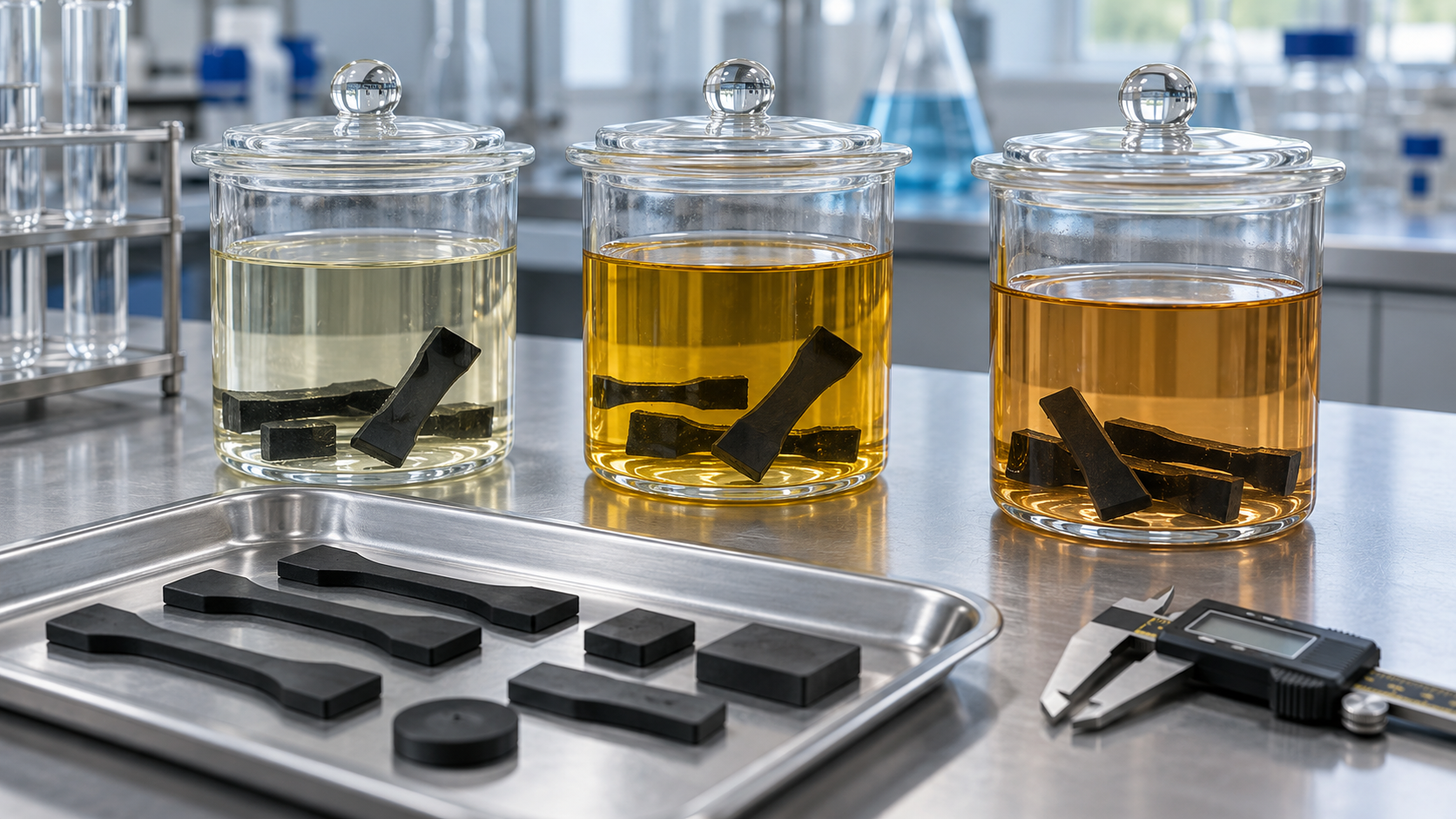
Reviewed October 17, 2026. Brief method descriptions rely on public standard scopes; the enquiry and approval workflow is practical purchasing guidance, not a test procedure. Google Trends could not be accessed, so no measured trend claim is made. The generated cover is illustrative and does not document Linwell facilities or testing capability.
Send the reference grade, application, test requirements, trial quantity and destination. Ask which grade-specific technical and batch documents are available before arranging a controlled material trial.
Request a Quote
Leave a Reply