
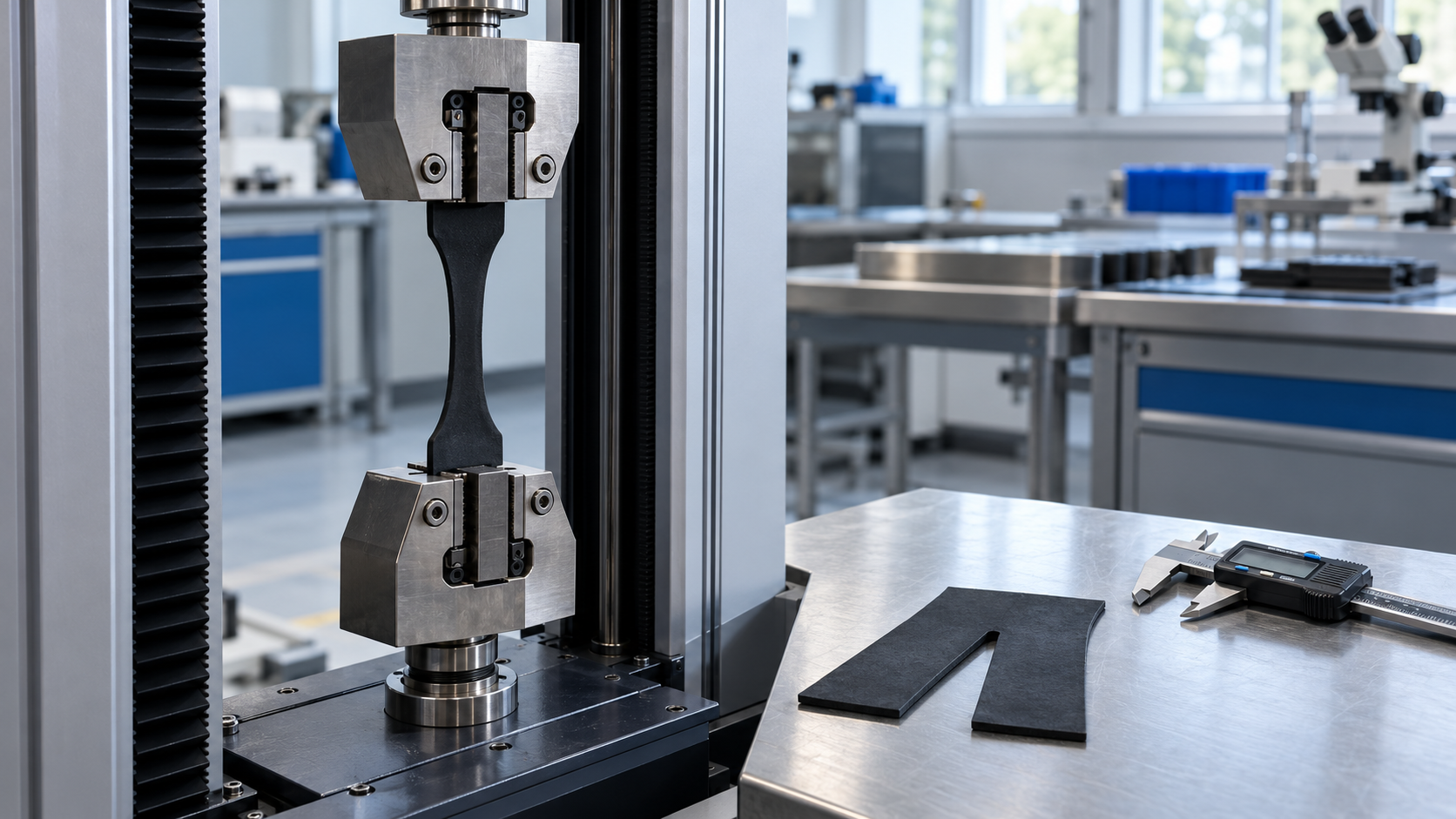


Rubber tensile strength and tear strength answer different questions, so one result cannot replace the other. For a purchasing decision, identify the compound, test method and specimen before comparing values. Use the approved specification and component trial to decide whether a proposed SBR or NBR input is acceptable.
1. Key Takeaways
- Keep tensile and tear requirements on separate lines in the specification.
- A finished compound report is different from a raw-polymer COA.
- Request the method, edition, specimen description and conditions beside each result.
- Resolve differences in the comparison basis before ranking suppliers.
- Use a documented production and component trial before approving a substitution.
A clear evidence request helps the supplier answer the actual buying question. It also prevents a strong result in one column from concealing a missing result in another.
2. What a Tensile Report Can Show
ISO 37:2024 covers tensile stress-strain testing of vulcanized and thermoplastic rubber. Its public scope includes strength, elongation at break and stress at a specified elongation, among other results. These are distinct reported properties; a buyer should not copy them into a single field labelled strength.
Ask which result supports each requirement in your drawing or compound specification. If the offer includes only a typical datasheet value, mark it as grade information until the supplier explains whether it is also an agreed acceptance limit. Keep the original document with the purchasing record.
For an enquiry about raw SBR or NBR, state the approved reference grade and intended trial. Do not represent a cured reference-compound result as a guarantee for every recipe made from that polymer.
3. Why Tear Strength Needs Its Own Evidence
ISO 34-1:2022 describes tear tests using trouser, angle or crescent specimens. Its scope notes that specimen shape, stretching speed and temperature affect the result, and that grain effects can matter. A report saying only tear strength leaves the comparison basis incomplete.
For procurement, the practical action is to preserve the selected method and specimen details in the evidence request. A result from another configuration may still be useful, but engineering must decide what it establishes. Do not silently treat different procedures as interchangeable.
A favourable tensile result does not fill a missing tear requirement. Ask for the separate evidence or record the deviation for technical review before releasing the order.
4. A Comparison Matrix for the RFQ
| Review field | Tensile evidence | Tear evidence |
|---|---|---|
| Property | Exact tensile property and reporting units | Exact tear property and reporting units |
| Method | Standard, edition and selected test basis | Standard, edition and specimen method |
| Identity | Compound code, revision and batch | Compound code, revision and batch |
| Conditions | Conditions required by the agreed procedure | Conditions required by the agreed procedure |
| Decision | Result against its own acceptance requirement | Result against its own acceptance requirement |
This matrix is a document-review aid, not a laboratory procedure. The responsible laboratory should use the full method selected in the agreement. Ask it to explain omissions instead of filling them with assumptions.
5. Identify the Material Behind the Numbers
Start the file with a simple question: what is being purchased? A raw polymer bale, an uncured compound and a finished moulded part need different evidence. A document can be authentic and still describe the wrong material for the approval decision.
Connect the offered producer and grade to the sample batch. Where a compound is tested, retain its code and revision and identify the owner of the formulation. Where a component is tested, retain the drawing revision and the sampling basis accepted by quality and engineering.
Use Linwell’s technical document guide to separate TDS information, batch COA results and safety documentation. Each has a useful role, but none should be assigned a broader scope than its issuer states.
6. Compare Reports Before Comparing Suppliers
Build a comparison sheet with separate columns for the approved requirement, supplier evidence and unresolved differences. Enter the original units and method descriptions. If normalization is needed, have the technical reviewer document the conversion and retain the original data.
Do not invent a universal pass limit for every SBR or NBR application. The drawing, approved compound specification and engineering acceptance plan should establish what is required. A competitor’s typical number is not automatically the right purchase limit.
When the evidence is incomplete, describe the gap precisely: missing specimen details, unidentified compound, unclear reporting units or an unspecified test edition. This gives the supplier a concrete action and keeps the decision traceable.
7. Run a Controlled Alternative-Material Trial
- Record the approved reference material and reason for the change.
- Agree the critical input-material and cured-compound requirements.
- Match the proposed sample to its producer, grade and batch records.
- Keep the baseline recipe and processing route documented.
- Record any formulation or processing changes made during the trial.
- Review tensile and tear evidence against their separate requirements.
- Complete the component or application checks selected by engineering.
- Record approval, restrictions and change-notification requirements.
An adjusted formulation can be a valid development outcome. It should, however, be recorded as an adjusted approval basis. A later repeat order must not rely on an undocumented change made during the original trial.
8. Handle a Missing or Conflicting Result
Keep sample identity and the original reports available while the discrepancy is reviewed. Ask whether the supplier and receiving laboratory tested comparable material under the same agreed basis. A document mismatch is not, by itself, proof that the material failed.
Assign responsibilities. Quality can coordinate the evidence review, engineering can assess relevance to the component, and procurement can obtain clarification from the issuer. Keep corrected reports beside the originals rather than overwriting the history.
If one requirement is met and another is not supported, retain that distinction in the approval status. A clear pending decision is more useful than a blanket accepted label that conceals an unresolved technical issue.
9. Questions to Include in a Supplier Enquiry
- Which producer, grade, compound revision and batch does the report cover?
- Which tensile properties and separate tear method are being offered?
- Are the values typical information or agreed acceptance limits?
- Can results be supplied on our specified comparison basis?
- What evidence will connect future deliveries to the approved trial?
- Which material or production changes require notification?
Include the quantity, destination and approval stage. A development sample request should not look like an unrestricted production release. Linwell’s rubber grade selection guide provides a broader framework for organizing the enquiry.
10. FAQ
Can tensile strength replace tear testing?
No. Keep each requirement and its evidence separate when both are part of the approval plan.
Can different tear methods be ranked directly?
Do not assume they provide an equivalent comparison. Ask the technical reviewer to align the method and specimen basis.
Does a raw NBR COA prove my finished part’s strength?
It establishes only the results within its stated batch scope. The actual compound and component need the relevant approval evidence.
Should I choose the supplier with the highest reported value?
First establish comparable tests and the complete application requirements. A larger number alone is not a purchasing approval.
11. Conclusion and Review Basis
Separate tensile evidence from tear evidence, connect both to the tested material and use a controlled trial to support the purchase decision. Clear records make an alternative easier to evaluate and repeat supply easier to manage.
Reviewed October 17, 2026. The brief method descriptions are based on the public scopes; the purchasing workflow is practical guidance and does not reproduce the standards. Google Trends was inaccessible, so no measured trend claim is made. The generated cover is illustrative and does not show a Linwell-owned laboratory.
Send the reference grade, application, test requirements, trial quantity and destination. Ask which grade-specific technical and batch documents are available before arranging a controlled material trial.
Request a Quote
Leave a Reply