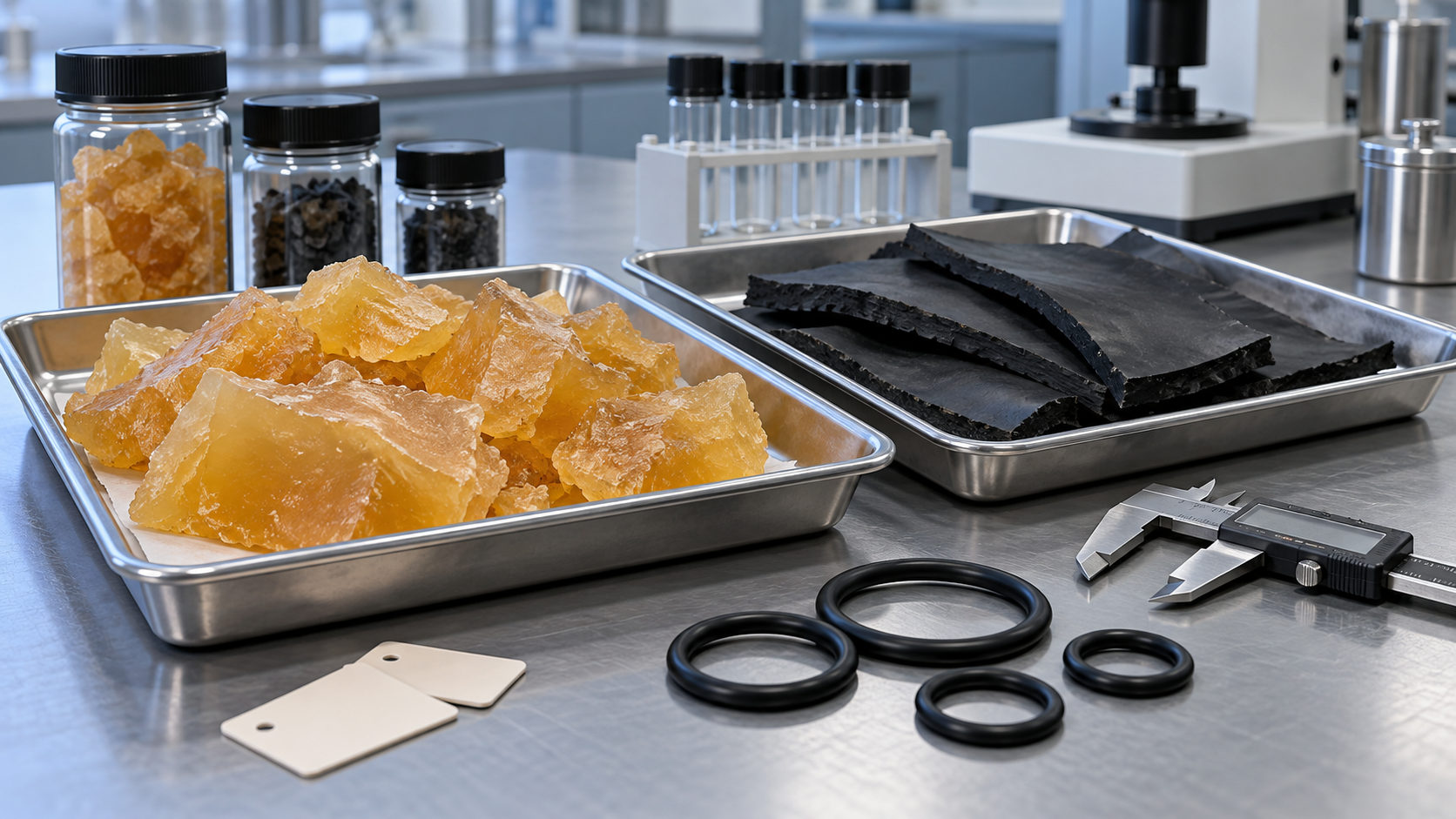


NBR acrylonitrile content is a grade-selection input, not a complete component specification. Use the producer’s stated ACN value together with viscosity, polymer type, processing needs and relevant compound test evidence. Matching one percentage does not establish that two grades are interchangeable or that a finished seal will meet its service requirements.
1. What ACN Content Means in an NBR Enquiry
Nitrile butadiene rubber is a family of copolymers based on butadiene and acrylonitrile. ACN is the common abbreviation for acrylonitrile. A reported ACN percentage identifies one aspect of polymer composition; it is not the percentage of NBR in a finished formulation.
Keep those two fields separate. A compound may contain ingredients in addition to the base polymer, while an ACN figure on a polymer data sheet describes the stated polymer product. Ask the issuer what material and reporting basis a value represents before copying it into a purchase specification.
ARLANXEO’s public NBR overview identifies the polymer family and its industrial applications. It does not establish a universal approval for every compound made from that family. Buyers still need the specific producer, grade, document revision and application requirement connected to the offer.
2. Why One Percentage Does Not Select a Grade
ZEON’s public Nipol NBR information describes ACN content as a variable used to balance low-temperature performance and fuel resistance. It also distinguishes grades through Mooney viscosity, polymerization chemistry and product form. This supports reviewing the whole grade definition rather than choosing from ACN alone.
Do not turn a general family description into a fixed service-temperature limit, a guarantee for a particular fuel or a promised component lifetime. Request evidence for the offered grade and the actual compound under a test plan appropriate to the intended product.
A useful first comparison is therefore documentary: are the candidates the same polymer category, supplied in the required form, with compatible processing characteristics and identifiable evidence? Only after those questions are answered should the technical team shortlist materials for controlled trials.
3. Build a Comparable Grade Information Sheet
| Field | Evidence to request | Comparison rule |
|---|---|---|
| Identity | Producer, complete grade name and revision | Avoid unnamed equivalents |
| ACN | Value, basis and whether typical or specified | Preserve the original meaning |
| Viscosity | Mooney conditions and specification window | Compare on compatible conditions |
| Polymer category | Conventional, modified or blended description | Resolve category differences first |
| Supply form | Bale, crumb, powder or other stated form | Match plant handling needs |
| Application evidence | Identifiable compound reports and trial plan | Keep polymer and part approval separate |
Add document dates and unresolved questions beside each row. A blank field means information is missing, not that the two offers match. Keep any proposed exception visible until the responsible engineer approves it.
4. Separate Typical Data from Purchase Limits
A typical value helps describe a product, but it should not silently become a batch acceptance limit. Ask which properties the producer specifies and which are included in the offered batch certificate. Retain the specification and certificate as different document types.
If the supplier quotes an ACN figure without explaining its status, request clarification before final approval. Record the issuer’s response with the original document. Do not invent a tolerance around a catalogue number or imply that every batch was tested for a property absent from its certificate.
The same discipline applies to viscosity and other reported characteristics. Linwell’s technical-document guide provides a wider purchasing checklist. An RFQ should state mandatory document requirements clearly, allowing the supplier to identify what is available and what remains to be agreed.
5. Define the Fluid and Cold-Condition Questions
For a seal or hose project, describe the actual fluid, exposure and operating conditions available from engineering. State the fluid designation or composition information that can be disclosed, rather than writing only oil resistant. Identify any remaining uncertainty in the application brief.
Describe the cold-condition requirement separately. Is the concern handling, assembly, start-up or performance during service? Ask the technical reviewer which evidence addresses that question. A general low-temperature statement and a specific component requirement should not be treated as the same acceptance criterion.
Use the supplier’s available reports as supporting evidence, then agree the missing work. Our fluid resistance report guide explains how to retain exposure and sample information. Avoid assuming that one attractive material-family statement closes every fluid and temperature requirement.
6. Check Processing Fit Before Ordering Production Material
Give the supplier the relevant process route and handling constraints, such as the trial mixing arrangement and required supply form. Request the offered grade’s current technical documentation. Ask your production team to identify which processing observations must be recorded during a comparison.
Keep the approved reference and candidate identifiable throughout trial preparation. Record formulation revision, mixing and curing information selected by the technical team. If an adjustment is made, document it rather than presenting the adjusted candidate as a direct unchanged replacement.
A successful laboratory sample should lead to the next defined approval stage. It does not automatically authorize unrestricted production purchasing. State whether the order is for development, a controlled plant trial or approved repeat supply, and preserve the decision owner for each stage.
7. Use a Controlled Replacement Decision
- Identify the approved grade and reason for considering a change.
- Collect the candidate’s complete grade and document definition.
- Compare ACN, viscosity, category and supply form without hiding differences.
- Agree which compound and component evidence must be obtained.
- Complete the controlled trial and review its results.
- Record approval scope, restrictions and change-notification expectations.
If candidates have the same stated ACN content but different descriptions, list those differences explicitly. Do not create an equivalence declaration from one matching field. Equally, do not reject a candidate solely from an unexplained difference before the technical reviewer has established its relevance.
Link the approved material definition to the first delivery and repeat orders. This makes the purchasing decision traceable when a different colleague places the next order.
8. An RFQ Checklist for NBR Buyers
Send a concise technical brief that suppliers can answer: reference producer and grade, intended application, mandatory specification, document needs, trial quantity, supply form, packaging constraints and destination. Separate essential requirements from information requested only for evaluation.
Include a clear evidence request: provide the current grade data sheet, identify which values are typical or specified, state the ACN and Mooney reporting bases, and confirm the documents available for the offered batch. Ask which application evidence relates to a reference compound and which relates to your proposed material.
Keep price, availability and technical approval as separate fields. A quotation is not an engineering approval. Linwell can be asked to identify available grade-specific information for the requirement; no particular inventory, certification, test service or supply commitment is implied by this checklist.
9. FAQ
Does the same ACN content mean two NBR grades are equivalent?
No. Compare the complete grade definition, relevant documents and controlled trial evidence.
Is ACN content the amount of NBR in my compound?
These are different quantities. Confirm whether the document describes polymer composition or the formulation’s ingredient proportions.
Can I choose an NBR seal from a polymer data sheet alone?
A polymer sheet is supporting information. The compound and finished component need approval against their applicable requirements.
What if a supplier provides only a typical ACN value?
Ask for the value’s status and the applicable purchasing specification. Do not invent a batch acceptance tolerance.
10. Conclusion and Sources
Use NBR acrylonitrile content to organize a grade comparison, then complete the other identity, processing and application checks. Keep typical data distinct from agreed limits and preserve the evidence behind any replacement approval.
- ZEON Chemicals: Nipol NBR public product-family and grade information
- ARLANXEO: NBR public polymer-family overview
Reviewed October 24, 2026. Producer information is summarized narrowly; the RFQ workflow is original purchasing guidance. Google Trends was actually attempted but inaccessible, so no measured trend or demand claim is made. Brand references identify sources and do not imply a distribution relationship.
Send your reference NBR grade, application, required documents, trial quantity and destination. Ask Linwell which grade-specific information is available before defining a controlled comparison.
Request a Quote
Leave a Reply