
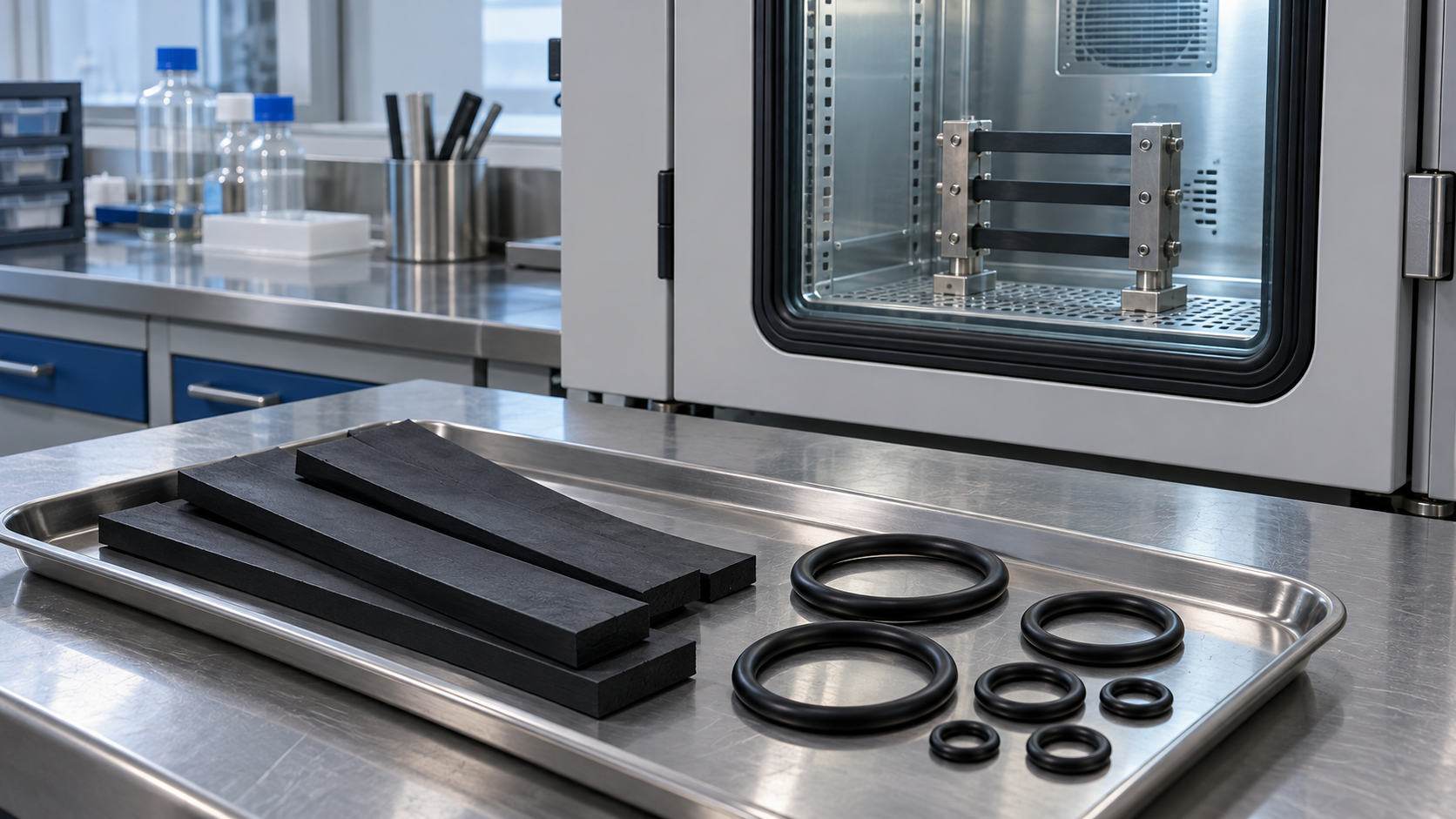


For rubber low-temperature testing, match the reported property, test method and compound identity before comparing supplier offers. A TR10 value is a laboratory retraction result, not an automatic minimum operating temperature for a seal or finished part. Use comparable reports to shortlist materials, then approve the application through an agreed validation plan.
1. Start with the Cold-Service Requirement
Tell the supplier what the component must do in the cold. A static gasket that remains compressed and a seal that must move after an overnight shutdown raise different qualification questions. Record the temperature profile, time at temperature, movement, contact medium and required function before requesting a particular test number.
Separate storage, transport, installation and operation. A shipment exposed to cold weather has not necessarily experienced the same conditions as an installed component under load. Ask engineering which stage controls material selection and which conditions need to appear in the purchase specification.
For an NBR sourcing enquiry, identify whether you are buying raw polymer, a mixed compound or finished components. A report for a supplier reference formulation can support a discussion, but it does not establish the performance of your own formulation or part. Keep this distinction visible in every comparison sheet.
2. What a Temperature-Retraction Report Measures
The public scope of ASTM D1329-16(2021) describes temperature-retraction testing for evaluating crystallization effects and comparing low-temperature viscoelastic behavior. It positions the method alongside other cold-temperature tests for material selection. This supports treating the report as one part of qualification.
ISO 2921:2019 addresses temperature-retraction characteristics of stretched vulcanized rubber. Its stated scope excludes thermoplastic rubbers. A buyer should therefore confirm material scope instead of assuming that a familiar report format applies to every elastomer offered.
Ask the laboratory to identify the standard, edition and any departures. This article does not provide a test procedure, specimen dimensions or operating instructions. Those belong in the applicable standard and the laboratory’s controlled method. Purchasing needs enough information to understand the evidence and connect it to the decision.
3. Read TR10 and TR70 as Named Results
In the ASTM description, TR10 and TR70 identify temperatures corresponding to 10% and 70% retraction. Record the named result as well as its temperature and units. Do not place an unlabeled “low-temperature value” beside a clearly identified TR10 result and treat the two as equivalent.
Preserve the original signs when transcribing temperatures. A missing minus sign can reverse the meaning of a comparison. Keep the original report linked to the spreadsheet, and have a second reviewer check important entries before they are used in an approval or supplier negotiation.
Do not convert a retraction temperature into guaranteed sealing, leakage or service-life performance. Ask which application evidence supports any operating-temperature claim. When a quotation gives a broad temperature range without a test basis, record the claim as unverified until its issuer explains what material and operating conditions it represents.
4. Use a Comparable Supplier Evidence Matrix
| Review field | Evidence to retain | Buyer action |
|---|---|---|
| Material identity | Compound code, revision and batch | Match the report to the offer |
| Result | TR designation, temperature and units | Avoid mixing different properties |
| Method | Standard, edition and deviations | Resolve compatibility questions |
| Specimen basis | Preparation and relevant conditioning | Confirm what was tested |
| Acceptance | Agreed requirement and review owner | Separate screening from approval |
| Application | Cold-start and functional validation plan | Close the remaining service question |
Use “not provided” for missing information. An empty field should not silently become a pass. If two suppliers report different properties, ask for a common comparison plan or a technical explanation before ranking their offers. Do not invent a conversion factor between unrelated report values.
5. Connect the Sample to the Offered Compound
Request the sample identifier, compound revision, preparation record and report date. Establish whether the document gives typical development information, a specification limit or an actual result for the offered batch. These have different roles and should occupy separate columns in your records.
If a supplier provides data for a reference compound made from raw NBR, ask how that formulation relates to the material you intend to process. Keep confidential formulation details protected while agreeing enough identity information for traceability. A confidentiality restriction should not leave the buyer unable to identify the tested sample.
Our technical-document guide covers the broader document set. For low-temperature decisions, retain the original test report with the quotation, approved material code and relevant specification revision. This makes later repeat orders easier to review.
6. Build a Cold-Service RFQ Checklist
Write the RFQ around evidence and function. State the intended application and known cold conditions, then distinguish mandatory requirements from information requested for evaluation. If the acceptance limit has not been validated, ask for a test proposal rather than copying a value from an unrelated catalogue.
- Identify the raw grade, compound or finished component being purchased.
- Describe cold exposure, duration, movement and relevant contact fluids.
- Request the complete low-temperature report with named properties and units.
- Specify the agreed method and edition where already established.
- Ask suppliers to identify deviations and gaps explicitly.
- Define sample supply, comparison testing and final approval responsibilities.
A practical request is: “Please provide low-temperature evidence for the offered compound, including sample identity, test standard and edition, named results, units and deviations. Explain which additional evidence supports the proposed cold-service application.” Adapt that wording to the actual qualification plan.
7. Keep Other Performance Requirements in View
Cold-temperature behavior is one approval question. The material may also need to meet requirements for fluid exposure, compression recovery, strength or processing. Review those requirements together instead of selecting the lowest reported temperature and assuming every other property follows.
For related evidence, see our guides to fluid-resistance reports and compression-set reports. Each property answers a different question. Neither a common polymer name nor one matching test result establishes complete compound equivalence.
Record trade-offs and unresolved items before approving a change. The approval file should state what was accepted, for which application, and under which restrictions. If production material or preparation changes, use the agreed notification and requalification process rather than relying indefinitely on an old development report.
8. Move from Screening to Application Approval
First review document completeness. Next compare shortlisted materials on a common technical basis where practical. Finally evaluate the intended component under representative conditions, with the functional acceptance criteria agreed beforehand. A laboratory screening pass is not the same event as final product approval.
Assign an owner to every open item. For a seal, engineering may need to define what counts as acceptable function during cold start and subsequent operation. Purchasing should retain the decision, rather than creating a service limit from the available report number.
Before the repeat order, verify that the quotation and supplied material still match the approved identity and revision. Retain samples where appropriate and follow the agreed investigation process for unexpected results. Commercial urgency does not resolve a pending technical approval.
9. Frequently Asked Questions
Is TR10 the minimum service temperature of an NBR seal?
Do not use it as an automatic service rating. Identify the tested compound and request representative functional evidence for the intended seal and conditions.
Can two low-temperature reports be compared directly?
Only after matching the named property, method, material identity and relevant test basis. Record unresolved differences before ranking suppliers.
Does a raw polymer report approve my finished component?
No. Confirm the link between the raw material, your compound and the component qualification evidence.
What should I do when the report lacks units or a sample code?
Request a corrected or clarified report from its issuer. Preserve the original document and keep the comparison pending until the missing evidence is resolved.
10. Conclusion and Sources
Use rubber low-temperature testing to support a clear purchasing decision: identify the material, retain the named results and method, and close the application-validation requirements before approval. A complete evidence trail is more useful than an unexplained temperature claim.
Sources reviewed October 24, 2026. This original purchasing checklist summarizes public method scope; it is not a laboratory procedure. Google Trends was inaccessible, so no measured search-trend claim is made.
Send Linwell your grade or compound reference, intended application, cold-service requirement, document needs, quantity and destination. Include the report you want to review so the enquiry starts from a clear technical basis.
Request a Quote
Leave a Reply